Domesticating AI: It’s not coming, it’s already here
AI is already slipping into ordinary life. This Director’s Cut looks at local models, Home Assistant, data sovereignty and what happens when a house starts understanding context.

A shorter version of this essay was published by New Atlas as “Domesticating AI – It’s not coming, it’s already here.”
A few weeks ago, my neighbour asked what I thought his rather bare fence might look like with something growing against it.
Normally, this would have involved a series of increasingly vague hand gestures. “You could put a large pot there,” I said, pointing at the fence, “then perhaps train some jasmine along wires. Sort of... across there.” He looked at the fence. I looked at the fence. Neither of us could really see the thing we were supposedly discussing.
So I took a photograph with my phone, opened ChatGPT and asked it to add a potted jasmine espaliered against the frame. The first attempt was wrong in several small but fairly important ways. The pot was too large, the plant was too mature and the whole arrangement looked as though it belonged outside a boutique hotel rather than beside a suburban driveway. I asked for a few changes and, about a minute later, we were looking at a convincing approximation of the finished idea.
It was not architectural visualisation. It would not have survived scrutiny from a landscape designer, and I certainly would not have used it to order materials or calculate clearances. But it did something much more immediate: it turned an imprecise conversation into a shared picture. The technology had quietly removed the most difficult part of the discussion.
That, more than the spectacular demonstrations, is where artificial intelligence is beginning to matter. Not in a humanoid robot walking through the front door, or a machine announcing that it has achieved consciousness, or even in the great industrial upheavals that dominate most conversations about AI. It matters when it removes a tiny point of friction from an ordinary moment, when it helps two people understand each other, and when it becomes useful enough that nobody thinks to call it AI any more.
During a recent conversation with a diving friend, we found ourselves discussing dive computers. He had apparently mentioned one to an AI assistant earlier that morning. In the middle of the conversation, he pulled out his phone and said, “Hey Grok, show me that dive computer we were talking about this morning.” It did. And yes, the Shearwater Peregrine is $580 worth of gorgeous.
What impressed me was not that the system could search for a dive computer. Search engines have been finding products for decades. The interesting part was that he didn't have to remember the model, reconstruct the previous search terms or explain what he meant by “that one.” The assistant had context. It understood that the current request referred to an earlier conversation and that the object under discussion had continuity between the two.
This sounds trivial until you consider how much of human interaction depends on precisely that ability. We constantly say things like, “Put it over there,” “Do the same thing as last time,” “Not that one, the other one,” “Remind me when we get closer,” or “Turn it back off.” These are hopeless instructions for conventional software. They rely on shared experience, recent history, physical surroundings and assumptions about what both parties already know. Humans resolve these ambiguities automatically. Computers traditionally require us to eliminate them.
For most of the history of personal computing, we have been forced to translate our intentions into forms the machine can accept. We learn menu structures, command syntaxes, filenames, search operators, application conventions and the exact names of things. We have become so accustomed to this that we barely notice the work involved.
AI begins to reverse that relationship. The machine is gradually learning to meet us closer to where we already are.
When I first began using Apple Pay, tapping a watch against a payment terminal regularly prompted astonishment. People behind the counter wanted to know how it worked. Friends asked whether it was safe. Occasionally, somebody would stare at the watch as though I had just paid using a surgically implanted gemstone. Now nobody cares. The technology has disappeared into the act of buying something. Voice assistants followed a similar trajectory. They began as novelties: machines that could tell jokes, answer basic questions and misunderstand song titles in entertaining ways. Then, almost without fanfare, they became useful.
Set a timer. Add something to the shopping list. Play the radio. Turn on the kitchen light. These were small commands, but they removed small amounts of friction repeatedly throughout the day. That repetition matters. A technology used once a year can remain visibly technological. A technology used ten times a day becomes part of the furniture.
Unfortunately, conventional voice assistants also exposed the limits of the previous generation of computer interaction.
“Alexa, turn the kitchen light on.”
The kitchen light comes on.
“No, turn it off.”
“There is no device called ‘it’.”
Oof.
That exchange perfectly captures the problem. The assistant can execute a command, but it has no meaningful understanding of the conversation in which the command occurred. The word “it” has an obvious referent to any human listener. To the software, it is an unidentified device name.
No memory. No continuity. No context.
We learned to compensate. We memorised the correct names of devices. We organised our homes into areas and groups. We developed rigid phrases that the assistant was likely to recognise. In effect, we trained ourselves to speak computer.
I've been using Home Assistant for around 12 years. It began, as these things often do, with a Raspberry Pi and a modest ambition. I had two goals: control a few lights more intelligently, and do everything in one app, not six. Then came sensors, switches, smart plugs, thermostats, blinds, cameras, irrigation controllers, power meters, presence detection and dashboards. One thing led to another.
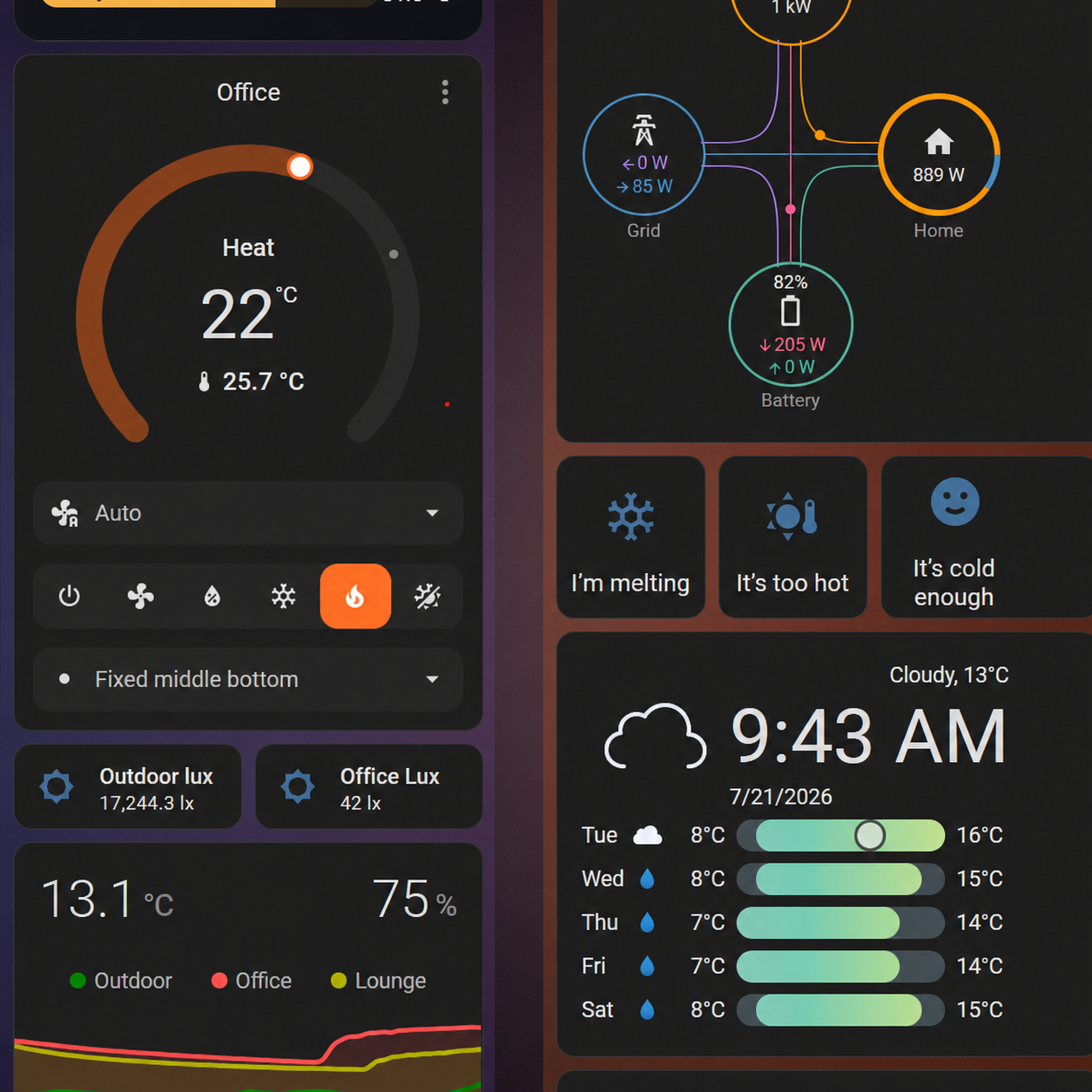
These days, Home Assistant runs as a virtual machine on a Proxmox server. This is the way. Sensors and controllers are distributed throughout the house, reporting everything from temperature and humidity to solar generation, battery state and whether somebody has left a door open. Lights respond to occupancy and time of day. Blinds adjust according to the position of the sun. Curtains react to sunrise and sunset. Moisture sensors inform irrigation. Solar generation, household consumption and battery storage are monitored in real time. Dynamic electricity pricing creates opportunities to buy, store, consume or export power at different times.
None of this happened all at once. It accumulated and evolved.
That is important, because “smart home” is a misleading phrase. It suggests a finished consumer product: a home that has been made intelligent through the purchase of a box. In reality, most smart homes are collections of small decisions, compromises, automations and devices assembled over years. They are ecosystems rather than products.
Home Assistant sits in the middle of mine as a kind of mission control.
For most of its life, however, interacting with it required predetermined structures. I could build elaborate automations, but each automation had to anticipate the circumstances under which it might be used. If the office temperature rises above a threshold, and the window is closed, and somebody is present, and the time is between these hours, then switch on the air conditioner.
This is wonderfully powerful. It is also rigid. Every useful behaviour has to be imagined in advance and translated into rules. Voice control provided another layer, but it remained largely command-based. The system would do what I told it, provided I used the right words and referred to the right device by the right name. Then Home Assistant began connecting its voice system to language models.
Out of the box, it's called Nabu (or Mycroft or Jarvis), although that name did not survive for long.
Nabu knew it had turned on the kitchen light. When I said, “Turn it off,” it understood that I was still referring to the kitchen light. That single exchange felt disproportionately important. It was not simply a more accurate command parser. The system had retained the subject of the conversation. Suddenly, I was no longer issuing isolated instructions to a collection of devices. I was interacting with something that possessed a working understanding of the current state of my home and the recent conversation surrounding it. I could say, “Turn off all the lights except the one in here,” or “It’s too warm downstairs,” or “Switch off the air conditioners, but leave the bedroom one running.” The system could interpret the instruction in relation to rooms, devices, states and context. The house had not become intelligent in the science-fiction sense, but the interface had become more human. That distinction matters.
The first genuinely useful connection between AI and Home Assistant was not anything especially theatrical. I did not ask it to launch drones, identify intruders or dim the lights while announcing that dinner was served. I connected it to the climate information already being collected around the house.
Home Assistant was already monitoring temperature, humidity, air quality and the state of the heating and cooling systems. Before AI, that information mostly lived on dashboards. I could open a page, look at several graphs and work out what was happening, but I had to know which sensors mattered and what I was looking for.
Connecting a language model changed the way I could approach the same information. Instead of finding the right dashboard and comparing a collection of readings, I could ask what was happening in the house. What's the temperature trend in the house? How long has the aircon been running? Was one room behaving differently from the others? The AI was not producing new data. It was giving me a more natural way to interrogate the data I was already collecting. That was the practical shift for me. Home Assistant had always been very good at climate monitoring, but it expected me to meet it on its own terms: entities, histories, graphs, thresholds and automations. Adding AI meant I could begin with the question rather than the interface.
It was also a useful lesson in where AI belongs. I didn't hand climate control over to a language model and hope for the best. The reliable parts remained conventional Home Assistant automations. Sensors measured conditions, thresholds triggered actions and the heating and cooling systems continued to operate according to explicit rules.
The AI sat above that layer, helping me understand what the system was seeing and translating ordinary language into something the existing machinery could use. That arrangement felt much more sensible than trying to replace everything with AI. The automations remained predictable. The AI made them easier to inspect, question and direct.
It was not running the house so much as becoming a conversational interface to the house I had already built. Traditional home automation is built around precision, and that precision is both its strength and its weakness. A well-written automation behaves predictably. If the conditions are met, the action occurs. There is little room for ambiguity. Humans, however, are ambiguous creatures. We do not naturally think in Boolean logic. We rarely describe our intentions as complete, formally structured commands. We leave things unstated because we assume the listener can infer them.
When I say, “It’s a bit dark in here,” I may be making an observation or I may be asking for a light to be turned on. A human companion interprets the statement using tone, context, time of day and shared experience. A conventional automation system needs a rule. An AI system can make an inference. That does not mean the AI should be allowed to make every decision. In fact, one of the central challenges in domestic AI will be deciding which actions should remain deterministic and which can tolerate interpretation.
I want the system to infer that “It’s getting stuffy” might mean increasing ventilation. I do not want it to infer that I would probably enjoy unlocking the front door for somebody it vaguely recognises. There is an enormous difference between conversational flexibility and operational authority. The most useful domestic AI will not replace conventional automation. It will sit above it. Reliable systems will continue to handle safety-critical, repetitive and precisely defined tasks. AI will help interpret human intent, coordinate existing systems and deal with situations that are too varied to encode conveniently in advance.
That is less glamorous than the idea of an all-knowing digital butler, but much more practical. AI does not need to control every part of the house. It needs to understand what I am trying to achieve and know which existing tools can achieve it safely.
The large commercial AI systems can already be connected to home automation platforms. In many cases, they are far more capable than anything an individual can run locally. They understand language more reliably. They possess much broader general knowledge. They can solve more complicated problems and sustain more sophisticated conversations.
But connecting the intimate operational state of a home to an external service raises big questions.
A smart home knows when people wake up. It knows which rooms are occupied. It may know whether the doors are locked, which lights are on, when somebody takes a shower, whether a television is playing and when the house is empty. Add voice interaction and it may also hear the questions, frustrations, routines and incidental conversations that occur around it.
This is unusually revealing data. It is not simply a list of device states. It is a behavioural model of the household.
That is why I care about local AI.
Running a model inside the boundaries of my home means the system can interpret commands and access household context without sending that information elsewhere. It still requires careful design. “Local” is not a magical guarantee of privacy or security. A badly configured local service can expose information. Software can contain vulnerabilities. Devices can communicate unexpectedly. Logs and backups can retain sensitive material. But local processing gives me a meaningful degree of control. I can decide what the system can access. I can inspect where it is running. I can disconnect it from the internet. I can keep the underlying data even if a company changes its terms, removes a feature, raises its prices or ceases to exist.
That last point is often overlooked.
Data sovereignty is not only about secrecy. It is also about continuity, ownership and dependence.
If a cloud service becomes the primary interface to my own information, what happens when the service changes? Do I still possess the source material? Can I move it elsewhere? Can another tool read it? Can I continue using the system without paying an indefinitely escalating subscription? Can I inspect what it has remembered about me? Can I correct it?
A locally controlled system does not solve every one of these problems, but it makes the answers less dependent on the goodwill of a remote provider.
Only a few years ago, running a genuinely useful language model at home would have been an absurd proposition for most people. The hardware requirements were high, the software was difficult to assemble and the results were limited. That has changed remarkably quickly. Consumer graphics cards can now run models that are good enough for summarisation, classification, home control, document retrieval, transcription and many everyday questions. Mini PCs have become more capable. Open-source projects such as Ollama have made model deployment dramatically easier. Hugging Face has become a vast clearing house for models, datasets and tools.
None of this means a computer under my desk can compete with the infrastructure behind the largest commercial systems. It can't.
A datacentre-scale AI service has access to enormous computational resources, specialised hardware and models that may contain hundreds of billions of parameters. My graphics card is something I can hold in two hands, provided I first remove enough cables and apologise to my spine. But domestic AI does not always need to compete on raw intelligence. It just needs to be good enough for the task. A local model doesn't need to know the entire history of European diplomacy to understand that “turn off everything downstairs” refers to a known group of household devices. It doesn't need to produce a doctoral thesis to summarise a utility bill, or need to outperform the world’s best programmers to search a collection of personal notes and tell me where I documented a particular server setting. A smaller model with access to the right local information can be far more useful than a more powerful model with no understanding of my environment.
Context can outweigh scale.
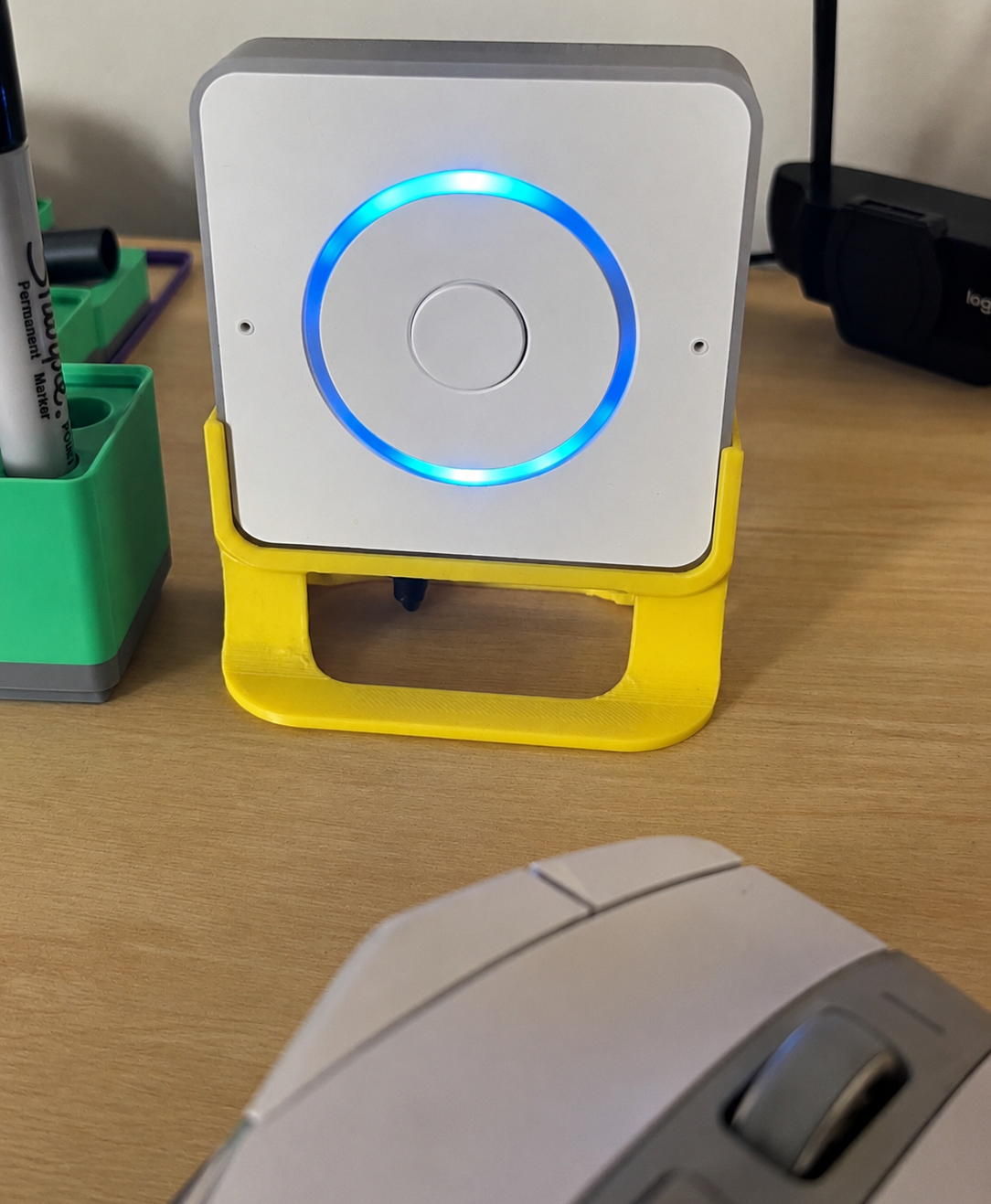
That may become one of the defining principles of personal AI. The biggest model is not necessarily the best assistant. The best assistant may be the one that knows which air conditioner I mean. The deeper I get into this, the less I think of AI as a separate product. It is becoming a layer across other systems. In the home, that layer connects natural language to devices, sensors and automations. Elsewhere, it could connect natural language to documents, email, calendars, finances, health records, photographs, research notes and personal archives.
This is where the idea becomes much larger than voice-controlled lighting.
Modern life produces an extraordinary amount of information. Bills arrive by email. Appointments appear in calendars. Contracts are stored as PDFs. Warranty details sit in forgotten folders. Medical information is distributed across providers and portals. Terms and conditions change. Subscription prices rise. Newsletters accumulate. Notifications compete for attention.
We are not short of information. We are short of the time and attention required to interpret it.
A trusted local assistant could become a filter between the individual and this constant flow. It could say that an electricity bill is due on Tuesday and is 18 percent higher than the previous one. It could point out that a home insurance renewal has increased while the policy appears otherwise unchanged. It could notice that a concert I mentioned is coming to town and tickets go on sale next week, or that the replacement filter for an air purifier has been discounted, or that a passport expires in eight months, or that a service agreement contains an automatic renewal clause. None of these tasks are individually transformative. Together, they represent a form of cognitive support that could be genuinely life-changing.
One commenter on the original New Atlas publication of this essay made an excellent point: there is no need for a detailed six-month plan to arrive in 15 seconds if it can be produced privately and carefully within an hour.
Speed is one of the commercial AI industry’s favourite measures because it is easy to demonstrate. For personal AI, and for me personally, trust matters more.
I would rather have a slower assistant that operates within boundaries I control than a faster one that requires unrestricted access to my life.
We are all trying to drink from a firehose. The quantity of information directed at an ordinary person has become impossible to process fully, and this is not always accidental. Many organisations benefit when people are overwhelmed. A dense set of terms and conditions is less likely to be challenged. A complicated pricing structure is less likely to be compared. A constant stream of promotions makes it harder to distinguish a useful offer from manufactured urgency. A notification system that interrupts us repeatedly just cries wolf and destroys concentration.
An AI assistant could make this worse.
A commercial assistant whose incentives are aligned with advertisers, platforms or retailers could become the most persuasive salesperson ever created. It would know our habits, preferences, anxieties and weaknesses, and it would be present whenever we made a decision.
That prospect should concern us.
An assistant controlled by the individual, however, could have the opposite function. It could protect attention rather than compete for it. It could filter the noise. It could delay non-urgent information until an appropriate time. It could compare claims against previous records. It could identify when a “special offer” is more expensive than the price recorded three months earlier. It could remind us that we already own something similar.
It could prioritise local businesses, repair options or products with longer support lives if those values mattered to us. The political and economic significance of that is enormous. At present, much of the internet is designed to influence what reaches us. Search rankings, recommendation systems, advertising platforms and social feeds determine which information is placed in front of our eyes.
A personal AI filter could shift some of that power back towards the individual. Not by blocking the internet, but by mediating it according to rules we choose.
That possibility is likely to make some corporations deeply uncomfortable.
One of the most appealing ideas raised in the response to my article was that people might manage these systems through conversation rather than configuration files. That is the point at which local AI becomes relevant beyond enthusiasts. At the moment, building a capable local assistant still requires technical confidence. Models need to be installed. Hardware must be selected. Services require configuration. Permissions must be managed. Updates break things. Documentation is inconsistent. Error messages assume that everyone involved has been compiling Linux kernels since childhood.
It is much easier than it was, but it is not yet a household appliance - remember, your parents thought programming the timer on the VCR was hard!
The paradox is that AI itself may help close that gap. Instead of requiring somebody to manually define every source, schedule and rule, the assistant could ask questions. Would you like me to monitor bills for unusual increases? Which documents should I be allowed to search? Should I remind you before subscriptions renew? Do you want health-related information kept separate from general household records? May I use your location to identify nearby options, or should I ask each time?
That is a very different relationship from editing a configuration file. The system becomes teachable through dialogue.
This does not remove the need for transparent controls. In fact, conversational configuration could become dangerous if it hides what the system is really doing. Users should still be able to see permissions, data sources, stored memories and active automations in a clear interface. But conversation could make the setup process more accessible. A person should not need to understand YAML merely to tell a computer what information it may read.
There is, of course, a less philosophical question.
How many months of commercial AI subscriptions could I have purchased for the price of the graphics card in my server?
I have decided not to calculate this, predominantly for marital reasons.
Home technology enthusiasts are very good at converting unnecessary infrastructure into theoretical long-term savings. The arithmetic usually works best when equipment costs, electricity consumption, replacement parts and the value of our time are excluded.
Running AI locally is not automatically cheaper. A capable graphics card can be expensive. It consumes power. Servers generate heat. Storage needs backups. The system must be maintained. A commercial subscription may be far more economical for somebody who simply wants access to a powerful model.
But this misses the real motivation. I didn't build my local systems because they were the cheapest possible way to accomplish each individual task. I built them because I wanted control, integration, resilience, the pleasure of understanding how it works, and the fantastic rush when it does!
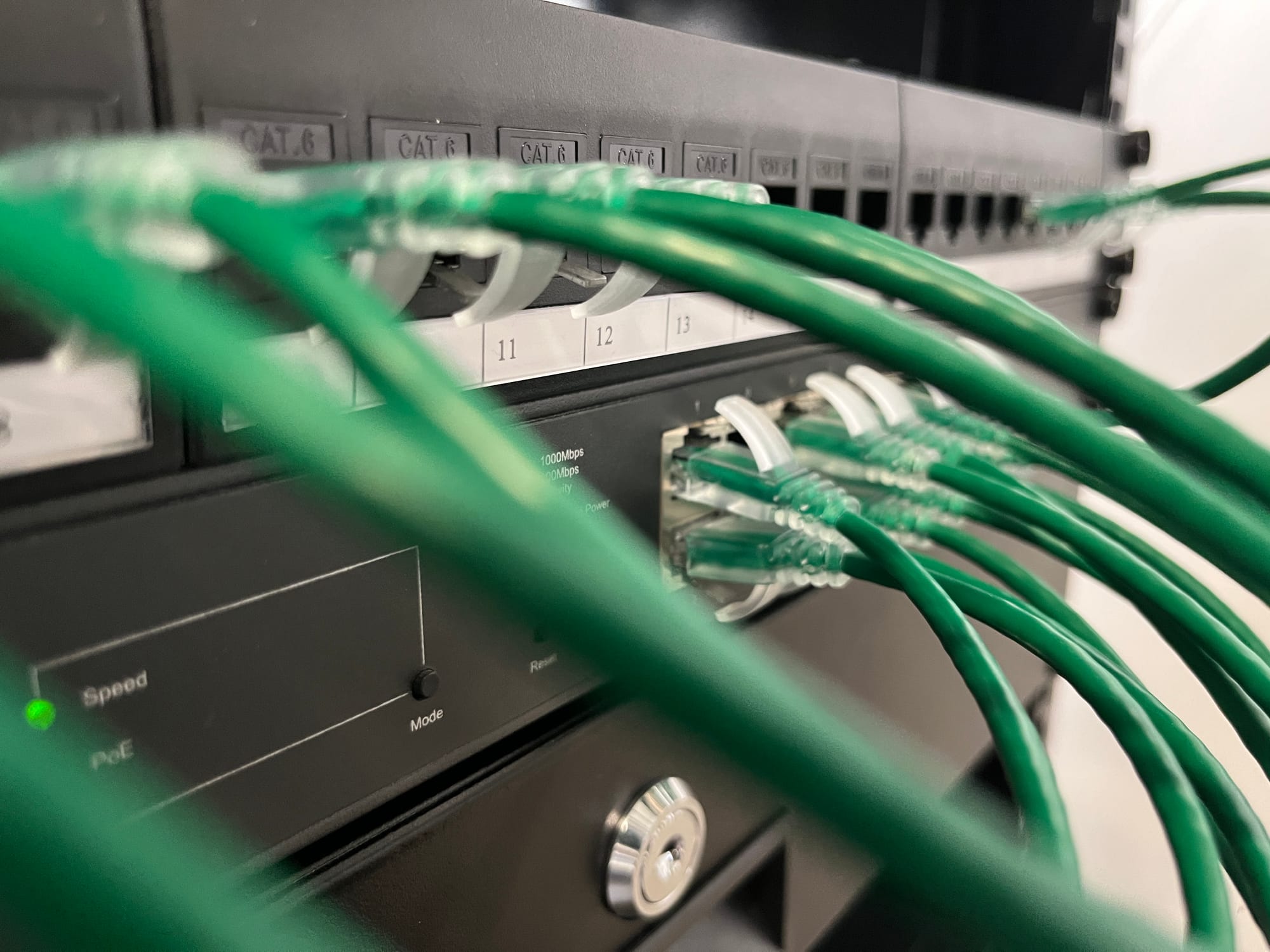
The same is true of many hobbies. Nobody calculates whether gardening is cheaper than buying vegetables by assigning an hourly labour rate to standing outside swearing at caterpillars. The work is part of the point. For me, the server rack is both infrastructure and workshop. It contains systems that are genuinely useful, that are noticed by the household when they are offline, but it gives me a place to experiment with ideas that would otherwise remain abstract.
Local AI is no longer something I only read about. I can connect it to my own data, observe where it fails and decide what I am comfortable allowing it to do. That experience changes how I think about the wider technology. It is difficult to be either entirely utopian or entirely apocalyptic about AI after watching a small model confidently misunderstand the name of a bedroom lamp.
My interest in all of this comes partly from being a data nerd. A house filled with sensors is an endlessly renewable source of questions.
How does indoor air quality change when the doors are closed? How much power does the office consume overnight? When is the battery usually full? How quickly does the kitchen heat up in the morning? Which automations are genuinely useful, and which ones merely seemed clever when I wrote them? Traditional dashboards help answer these questions, but they require the person to know where to look and how to interpret the data. AI creates the possibility of asking directly.
Why was power consumption higher yesterday? Did the air conditioner run while nobody was home? How often has the office exceeded 1,000 parts per million of carbon dioxide this month? Is the battery behaving differently from last winter? Which devices have not reported for more than a day? These are not futuristic questions. Most of the necessary data already exists. The challenge is connecting the language model to that data in a way that is selective, accurate and safe. That final word is doing a lot of work.
Language models are capable of producing convincing explanations even when the evidence is incomplete. A household assistant must distinguish between what it knows from recorded data, what it has inferred and what it is merely guessing. It should be able to say, “I can see that consumption increased between 6 pm and 8 pm, and the air conditioner was active. I cannot determine whether it was the sole cause.” That kind of restraint matters more than conversational charm. A trustworthy assistant should not simply sound human. It should communicate uncertainty better than humans often do.
Popular culture has given us a clear image of the AI-powered home. It is sleek, frictionless and slightly menacing. The assistant speaks with perfect composure. Every surface is interactive. Doors open automatically. Glass walls become displays. The owner issues vague commands while striding through an enormous workshop.
My own reality contains more dust, adapters and incorrectly labelled cables. But the Tony Stark comparison is not entirely misplaced. The compelling part of that fictional environment is not the holograms. It is the continuity of interaction. The assistant understands projects, locations, people, devices and ongoing intentions. It can move between tasks without treating each sentence as an unrelated request. That is what current AI is beginning to make possible.
Not the omniscient machine, but the persistent interface. The useful domestic AI will probably not resemble a robot. It may be distributed across the home, appearing through speakers, screens, phones and existing devices. It may have no single physical form. It may speak when spoken to and remain invisible the rest of the time.
It should know enough to be useful, but not collect information simply because it can. It should be able to explain why it took an action. It should maintain a history that the owner can inspect. It should separate observation from inference. It should degrade gracefully when the internet is unavailable. It should not become useless because a manufacturer discontinues a subscription service.
Most importantly, it should work for the people who live with it rather than for the company that supplied it.
Despite all this enthusiasm, local AI is not ready to become a mainstream household utility. The hardware remains expensive for many people. Model quality varies. Setup can be difficult. Integrations are immature. Security requires attention. Voice recognition still fails in noisy rooms. Models still hallucinate, they can misunderstand instructions, fabricate details or become confused by large amounts of context.
There are also unresolved questions around consent within the household. If one person installs a system that listens for voice commands, what does that mean for everybody else who enters the home? Which conversations are processed? What is retained? Can guests opt out? Should children have different permissions? Does the assistant recognise individuals, and if so, how?
A privately operated system may avoid some corporate surveillance, but it can still become a form of domestic surveillance if deployed carelessly. Technical control does not automatically produce ethical use. These issues will become more important as systems gain memory.
A voice assistant that forgets every interaction is frustrating. An assistant that remembers everything is alarming. The correct balance will depend upon selective memory: retaining useful context while discarding material that serves no continuing purpose. That is a much harder design problem than adding a bigger hard drive.
The most remarkable thing about technological change is how quickly it becomes ordinary.
A phone that can translate a conversation between two languages in real time should still feel miraculous. A watch that pays for groceries should still feel futuristic. A system that can take a photograph of a fence and generate a plausible landscaping concept in seconds should still feel like science fiction.
Instead, these abilities become features, then expectations, then things we complain about when they take slightly too long.
The same process is happening with AI in the home. The first time a voice assistant understands a follow-up question, it feels astonishing. The tenth time, it feels convenient. Soon afterwards, the older assistant begins to feel broken. This is how the future usually arrives: not as a single dramatic event, but as a gradual increase in what we consider unremarkable. Talking naturally to an AI that understands context, remembers previous conversations and controls parts of my house would once have been the central conceit of a science-fiction story. Now it is another service running quietly in my rack, but with no access to the pod bay doors.
It is imperfect. It is slower and less capable than the giant commercial systems. It misunderstands me. It requires more maintenance than any sane household appliance should. But it is here. It knows the state of the house. It can use the systems I have spent years assembling. And, increasingly, it feels less like I am operating software and more like I am explaining what I want.
That shift is the real story.
AI is not waiting somewhere beyond the horizon for a dramatic moment of arrival. It is being embedded into ordinary tools, conversations and decisions. It is appearing in workshops, phones, offices, medical consultations, creative projects and increasingly over-engineered suburban homes. We are not merely adopting AI products. We are beginning to domesticate the technology: deciding where it belongs, what it may access, which jobs it should perform and how much authority we are willing to give it.
Those decisions will shape the relationship far more than any demonstration of raw intelligence.
As for Nabu, the name was never quite right.
After some thought, I'm going to call it "Yaffle."
The house has not objected.
Read the shorter published version at New Atlas.